|
|
| ||||
|
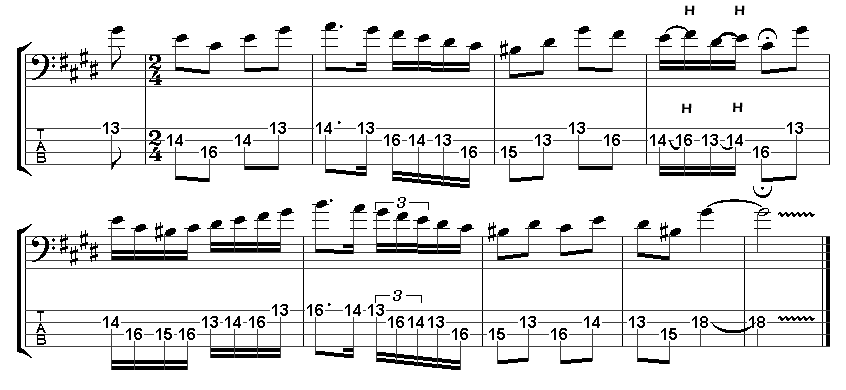
Most people think of symphonic acoustic bass when they think of the classical style. This section concludes with some guidelines for playing symphonic bass. Electric bass can also be used to play classical pieces. "Neoclassicism" is a term used for metal bands who play classical pieces with a powerful, distorted sound which is not inappropriate as the dynamics of classical music and the technical proficiency of the playing have many similarities. Example J1
In Example J1 I use the index finger on the D string and the middle finger on the G string throughout the whole piece. Example J2 (Andante by Fernando Sor)
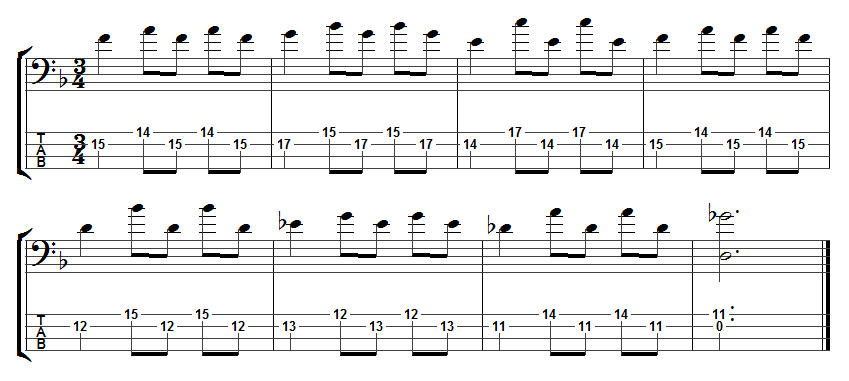
Example J2 uses the first eight bars of this piece and has been transposed to C#min. Andante means at a moderate, walking pace but I prefer to play this piece faster. Example J3
This example uses a series of small "sweeps" which is known as the raking technique. Alternating right-hand fingers to play two notes (strings) in each movement increases ease and speed. Classical guidelinesClassical music is usually played arco, i.e. with the bow. Generally, if a line ascends, it can be played with a crescendo. Conversely, if a line descends, it can be played with a decrescendo. This approach supplies natural dynamics. The highest note of each phrase may be played tenuto. Dynamics and techniques are often very specific in classical pieces. When playing a solo piece, however, the interpretation is generally up to the performer. Here are some possibilities for interpretation:
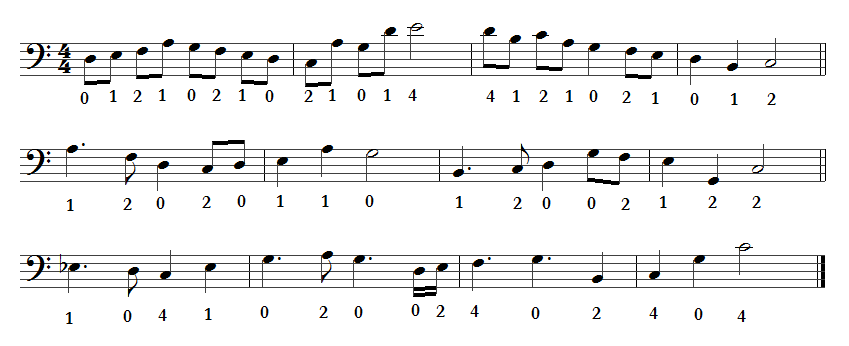
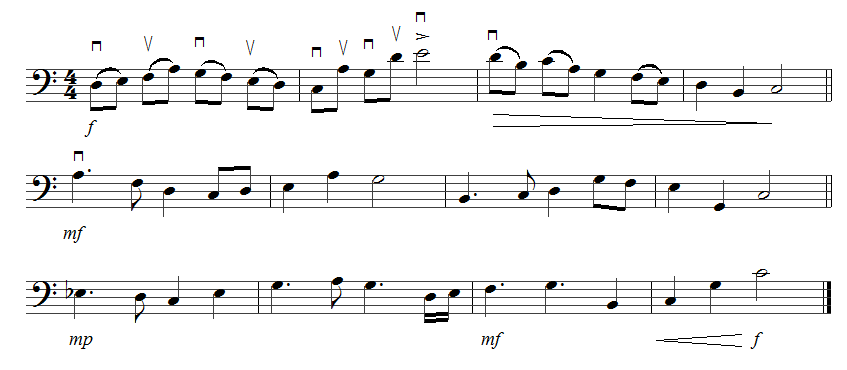
Play this next piece with various bowing techniques and dynamics. The piece has three four-bar sections, which can be practised separately. Suggested left-hand fingerings are marked; the rest is up to you. Example J4
This is the same piece again but with suggested dynamics and bowings. Because the first bar has slurred two-note groups, the bowing is alternating downbows with upbows. Make sure you do a "retake" of the bow at the beginning of the third and fifth bars, i.e. start with a downbow.
Example J5
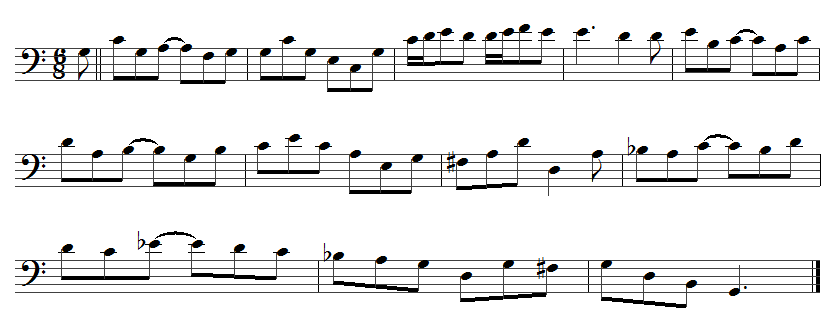
This is my interpretation of an excerpt from the Gigue, Suite 1 for Solo Violoncello by J.S. Bach. I have tried to keep it simple by omitting bow and dynamic markings. Many bass players (both acoustic and electric) study Bach due to the strength of his melodic-harmonic compositions as well as for technical purposes. The solo cello suites are often played on other instruments. |