|
|
| ||||
|
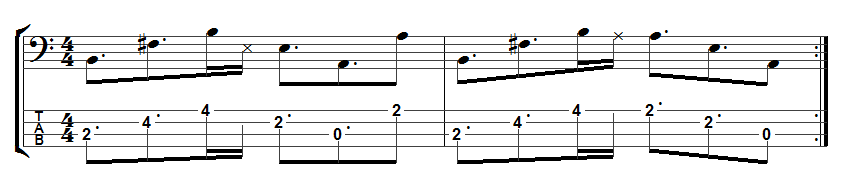
Latin is played straight and is not swung. Using the various chord tones provides the main notes to construct a very strong bass line. Latin is always spelt with a capital L as it is derived from Latin America. Example E1 (Bossa Nova)
Example E2 (Samba)
Example E3 (Rhumba)
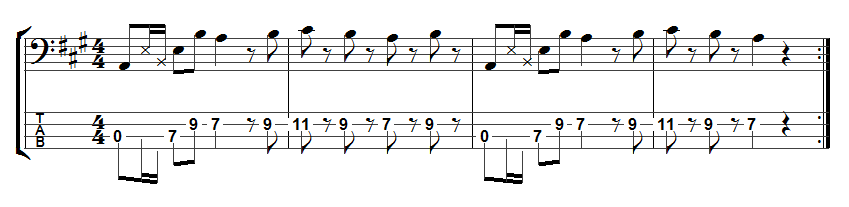
Example E4 (Salsa)
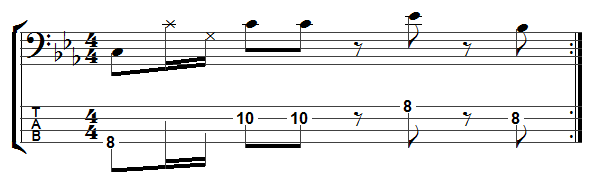
Example E4 is an Afro-Cuban Salsa with a Tumbao bass pattern. The distinctive feature of this is the absence of bass on beat 1. Example E5 (Merengue)
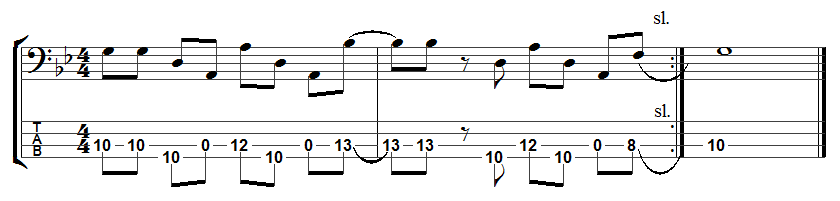
Example E6 (Tango)
Example E7
Example E7 has a consistent Tango groove but it could function as a solo due to its melodic character. Example E8 (Mambo)
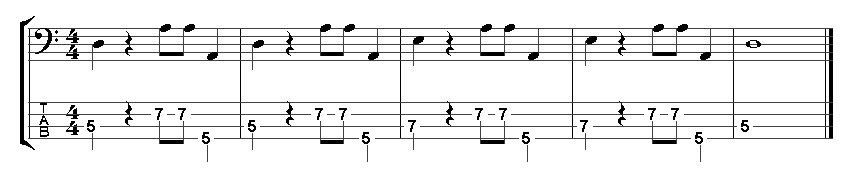
Example E9 (Cha Cha)
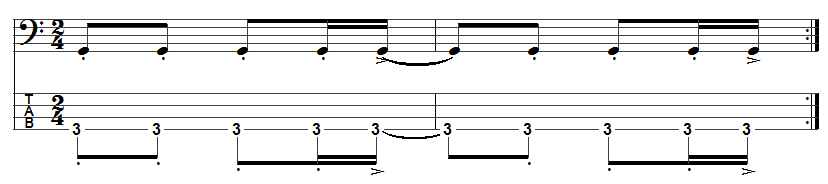
Cha Cha grooves can have the Cha Cha Cha (two eighth-notes and a quarter-note) in different places such as on the second, third or fourth beat. This Cha Cha pattern has the eighth notes on the third beat and assumes a chord progression of: Example E10
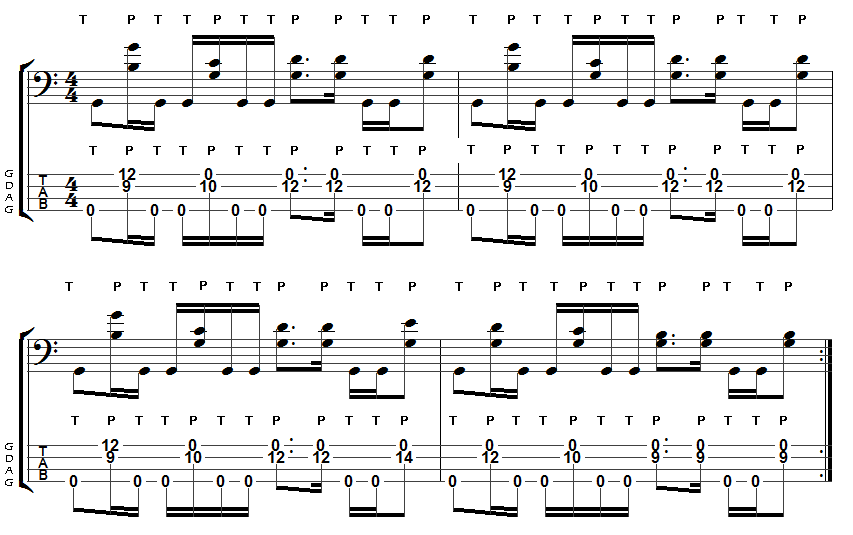
As Latin is very rhythmic, slap can easily be incorporated into this style. The E string in Example E10 is tuned up to G. This piece was originally written on a six string bass in the key of C. You might like to go back to Example E5 and try playing that as a slap riff. |