|
|
| ||||
|
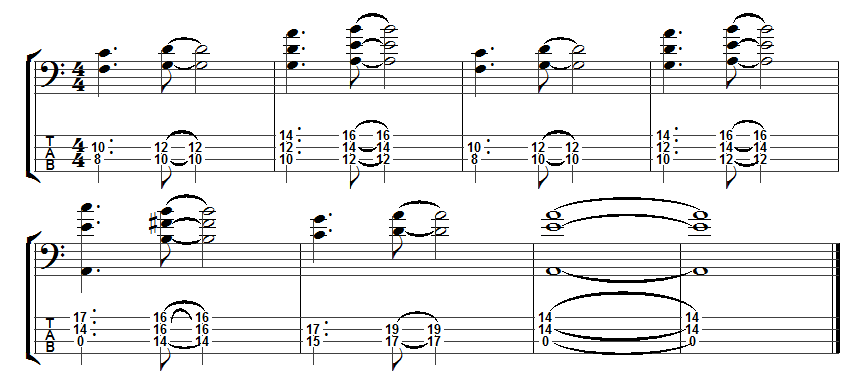
Chords are two or more notes played together. On the bass they are played by either plucking or strumming. PluckingBass chords are best played by having high notes and a low root note played together. Playing all low notes in a chord can be very muddy. The following major and minor 10th chords use a thumb and finger simultaneously on the E and G strings. (A 10th is simply a 3rd played an octave higher).
Example X1
What key is this progression in? Example X2
Example X2 uses thumb and index fingers for the two note chords and thumb, index and middle fingers for the three note chords. Use plenty of vibrato. Example X3
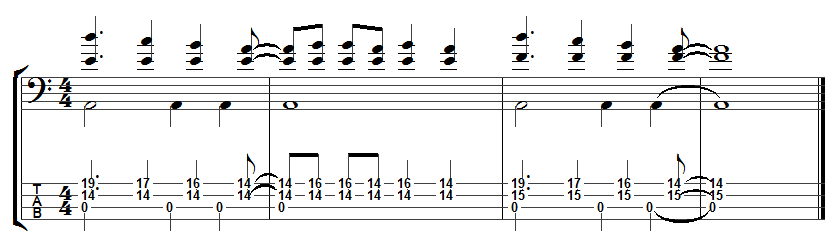
Example X3 is in Amin and adds a minor 6th in the third bar. You might notice that the notation has two voices. This is because the rhythm of the open A string notes is different to the higher notes. The only way to notate contrasting rhythms correctly is to assign a different voice to each part like you often do with guitar and piano notation. Example X4
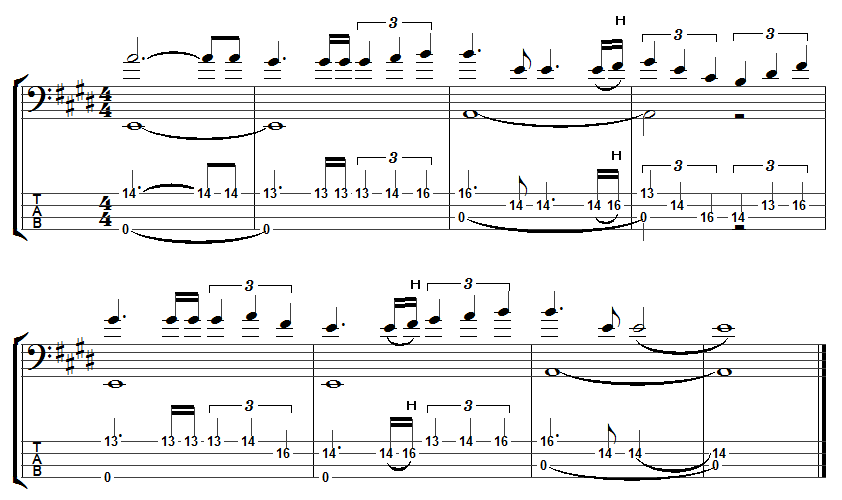
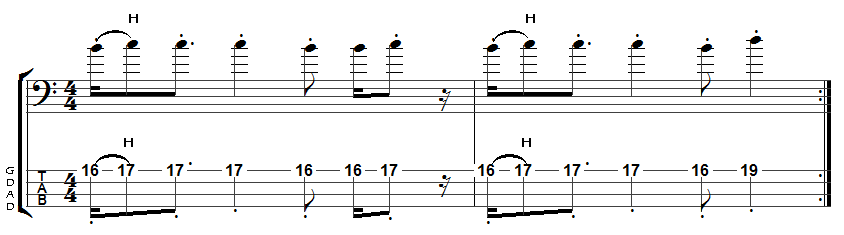
Example X4 belongs with Example X3 and complements it by resolving to E after starting on Esus4. StrummingMost strumming is simply moving your right hand up and down on the strings, with or without a pick. The next example involves strumming the D and G strings and playing a low D (detuned E string) with your thumb. It uses a funk guitar technique where the right hand strums continuous 16th notes. The left hand mutes some of the chords by holding gently and plays the other chords normally by applying pressure with the left hand. Example X5
Example X5 has been notated in a simple manner to make the essential notes easier to follow. Please note the following:
This piece is deceptively tricky. I would recommend you approach it in the following order:
|