|
|
| ||||
|
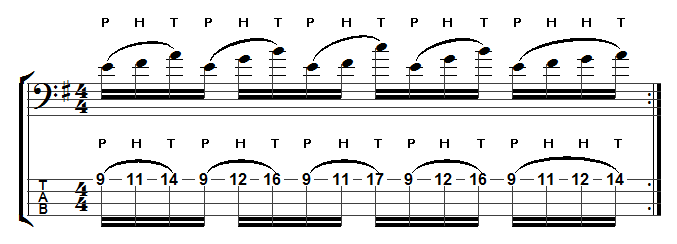
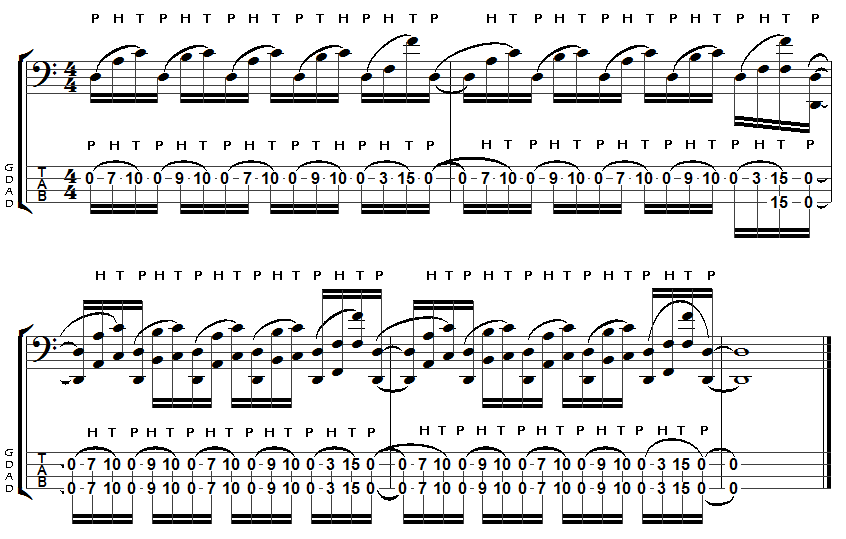
Finger tapping was originally a guitar technique first made popular by Eddie Van Halen. Tapping has since been developed into complex solo pieces by guitarists such as Stanley Jordan and has also been successfully used on the bass by people like Billy Sheehan, Stu Hamm and Victor Wooten. Although tapping is often associated with soloing it can also be used for actual bass lines. You'll enctounter plenty of H,T and P symbols in this section: H = Hammer-on P = Pull-off T = Right-hand tap Right-hand tap / Pull-offThere are two components in a right hand tap: 1. The tap itself which involves hitting the note and briefly holding it down for the duration of that note. 2. Removing the right-hand finger with a slight flick which actually takes the place of plucking the string. This is best done by moving the finger away from your body towards the ground. This flick is what actually starts many of the tapping riffs in this section. When the flick starts a piece like in Example V1 it is notated with a P for pull-off. Example V1
The time signature of tapping pieces is often determined by the number of notes in the sequence. In Example V1 having the notes grouped into threes would normally mean it was in triplets but you will notice that the first four phrases contain three notes each adding up to twelve. Twelve notes on their own could be 12/8 which is triplets but the last phrase has another four notes making sixteen. Example V1 is a bar of sixteenth notes. Example V2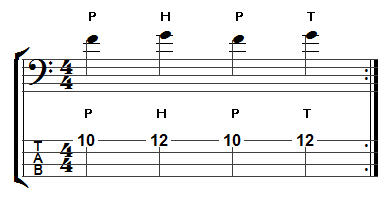
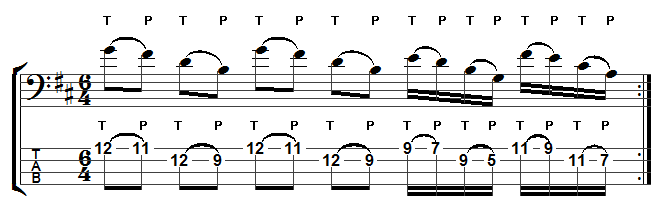
Alternating between left and right hands to play the same note enables you to play extremely fast such as Example V2. Although both hands alternate playing the G note on the 12th fret, each hand also creates the pull-off after playing the 12th fret. Example V3
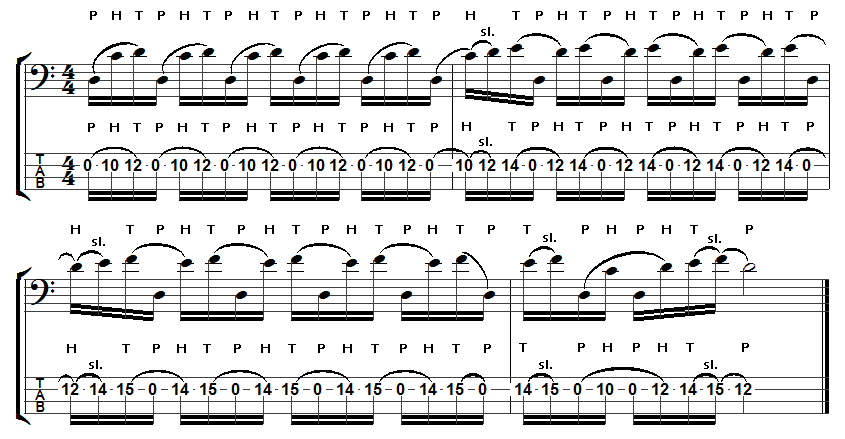
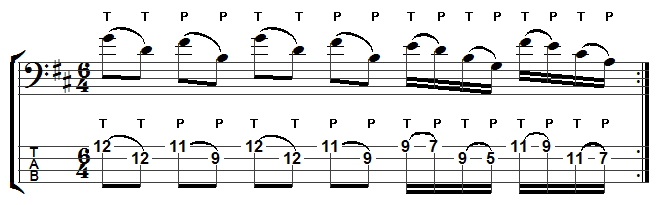
Example V3 creates the impression of delay and echo but was recorded without using any effects. Being in a minor key helps create atmosphere and the way the phrases are grouped in 3’s helps to create the impression of delay. The E string is tuned down to D and is played once at the beginning so that it can be sustained during the piece. I didn't notated the lond D note as it is optional. There are also some slides in this example notated as sl.
Example V4
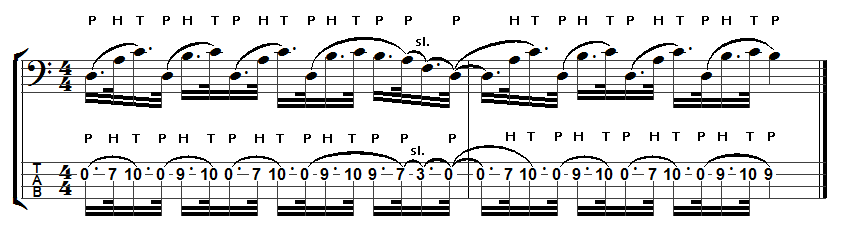
Sometimes the right-hand tap note provides the central note to link a passage together. Example V4 is in Dmin and has a shuffle feel. Example V5
Example V5 finishes with unison strings so the only way to play it is to use two fingers at once. The bottom E is detuned to D. You might notice that it uses the same main notes as Example V4 but with a totally different feel. The string noise from the nut side of the tapped strings does not come through an amp. Players often wrap a rag or some other material around the neck to reduce these unwanted sounds but you can't do that when you have open strings like in this example. Example V6 (one finger)
Examples V6 and V7 have the same notes in a different order. Example V7 (two fingers)
In Example V7 the first right-hand taps are held on together before releasing which changes the order of the notes. Example V8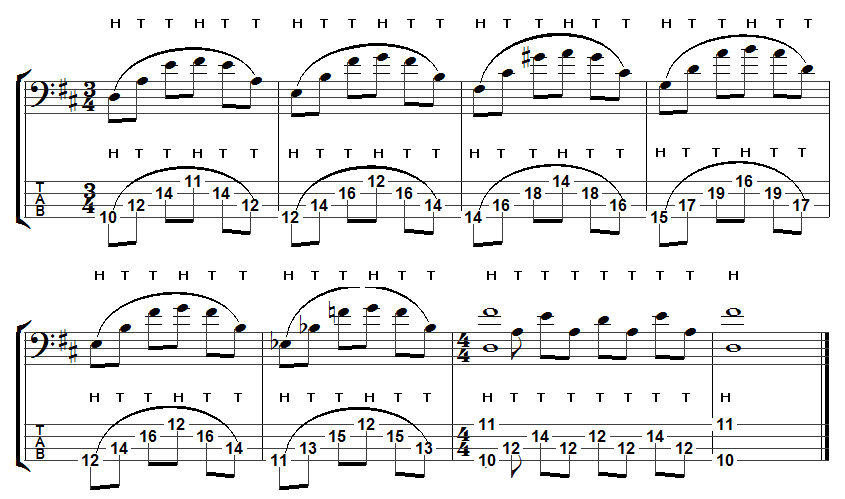
Example V8 requires both hands to tap out notes on the fingerboard. Notice that these arpeggio notes are spread across each string. |