|
|
| ||||
|
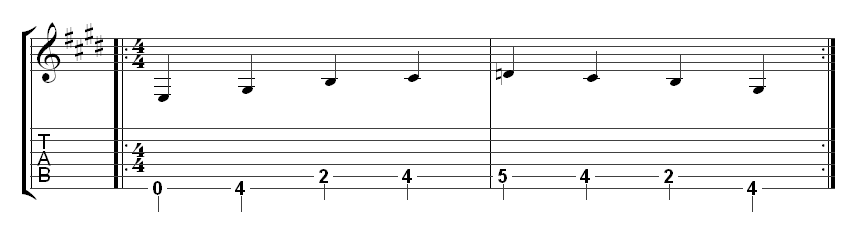
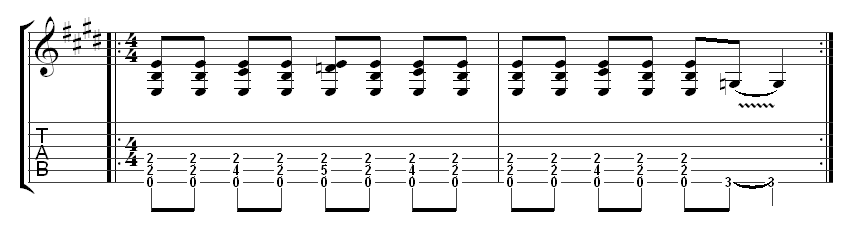
Blues is basically a feel and it is often conveyed in particular chord progressions. The most common of these is the "twelve bar blues". The Roman numerals refer to scale degrees as an aid to transposing into other keys. Improvisation is the what blues is all about as the progression is usually played many times. In blues, major and minor rules are often broken as minor notes can be played over major chords. This breaking of musical rules is part of the blues sound. Example 23a
This is a basic blues riff in the key of E.
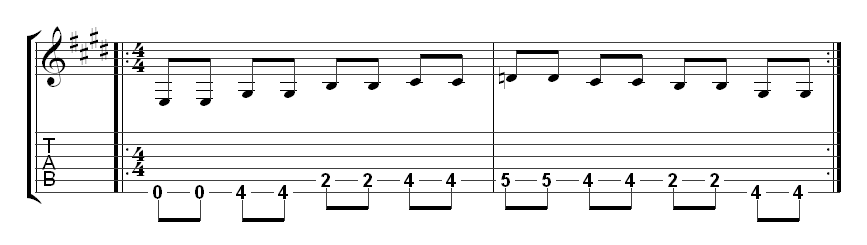
Example 23b
Example 23b starts straight and then becomes swing. It is played using the palm muting technique.
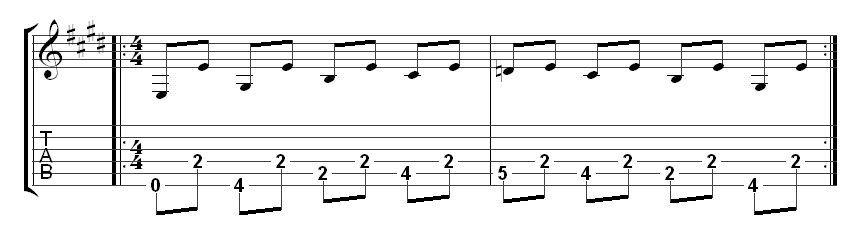
Example 23c
Using the same rhythm as Example 23b, every second note is the pivot note E which gives this riff a different sound like in the song "Ice cream man" by Van Halen. Fingers work well for this as your index or middle finger can stay on the D string while your thumb plays the E string.
Example 23d
This example uses the same notes again but plays all three strings together.
Example 23e
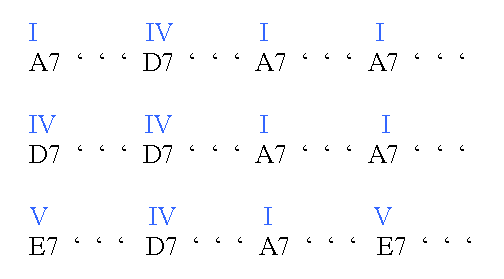
The most common blues chord progression uses only the I, IV and V chords although they are usually played as seventh chords. The following example is in the key of A and the solo uses plenty of bends and various notes from the blues scale.
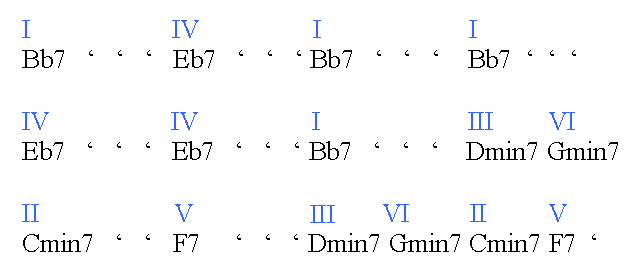
Example 23fThere are twelve bar blues patterns which include other chords when played in more of a Jazz context. This next example uses the standard I, IV and V chords but also includes the II, III and VI chords. It is in the key of Bb.
Try jamming over some Blues grooves in the Session time section. |