|
|
| ||||
|
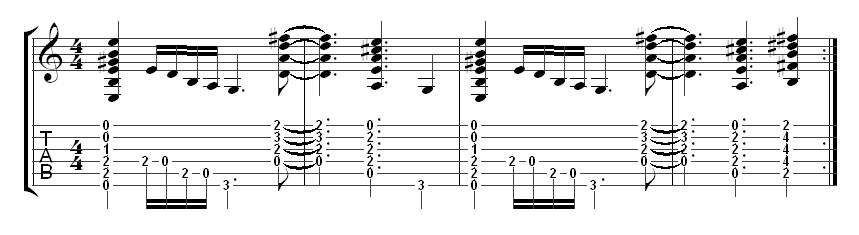
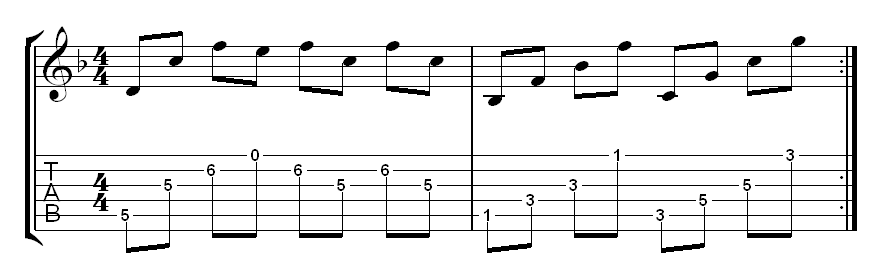
Rock music evolved from the invention of the electric guitar. There are certain techniques which are important when playing rock such as palm muting. Example 22a
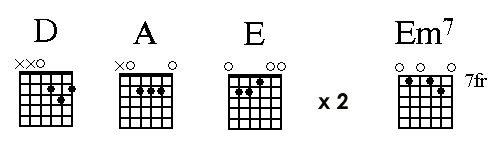
This example uses the three common open chords D, A and E. Other techniques used in this example are slides, vibrato and using the tremolo arm.
Example 22b
The same three chords as Example 22a are rearranged here and spiced up by adding some single string notes.
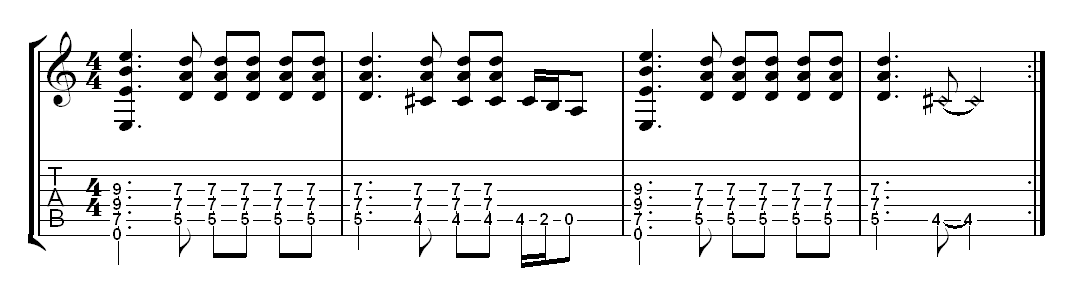
Not all rock playing uses distortion. The same chords could be used to create a lighter rock sound which has more of a country feel such as Example 24b. Example 22c
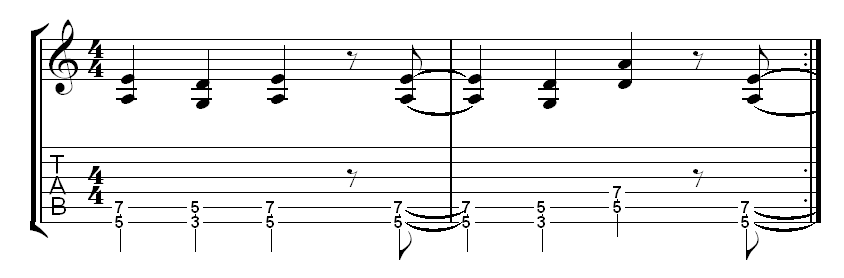
This example uses power chords.
Example 22d
As a guitarist you will often become a songwriter by virtue of the fact that you work on riffs and chord progressions. Whether or not you guide the bassplayer in the creation of such songs, you should be aware of the effect that the bassline has on a song. The following examples allow you to play the same guitar part over various basslines to see how they sound: Eighth note bassline following the changes:
Eighth note bassline staying on D:
Quarter note bassline following the changes:
Quarter note bassline staying on D:
The final example has the guitar and bass anticipating the changes by changing early which gives the music a sense of momentum.
What key is this chord progression in?
Example 22eThe final note in this two bar progression produces a squealing sound using the artificial harmonic technique.
Example 22fThe key of E is popular in rock and blues as it sounds deep and is good for open chord shapes. This example stays in E with various embellishments including hammer-ons and pull-offs.
Try jamming over some rock grooves in the Session time section. |